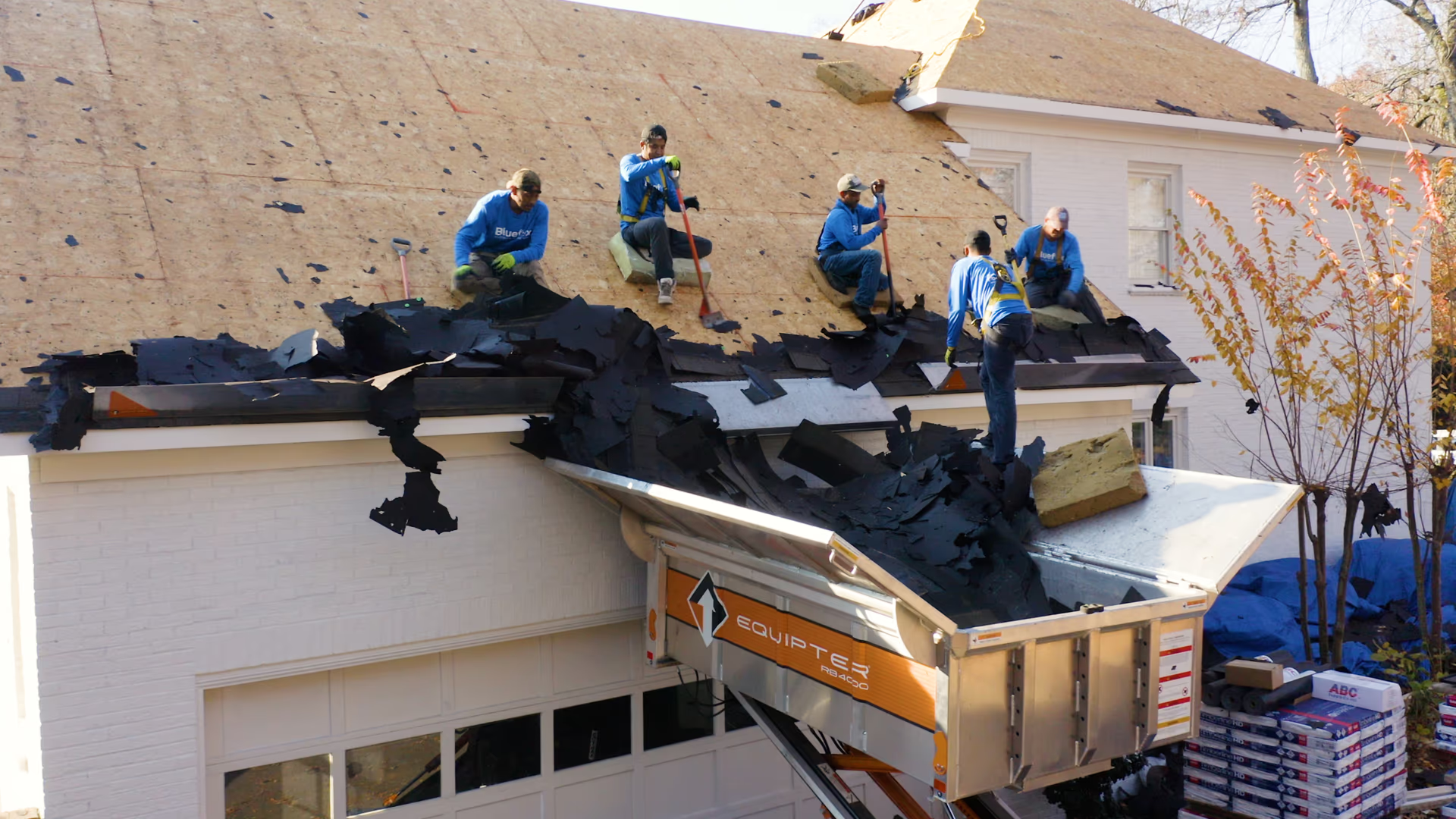
Jay with Blue Fox.
One of the shortcuts some roofing contractors take is reusing existing flashing when they replace a roof. And that's exactly what happened on this chimney right here.
The flashing was reused, and it's generally best to replace it.
Now, the original flashing here actually isn't bad. It goes into the mortar joints, which is something I like to see.
But if you look closely, you'll notice the step flashing only extends about two and a half inches up the vertical wall. The manufacturer requirements and applicable code call for four inches, so that's not right.
It also looks like some of the flashing is starting to pull away. You can see it coming loose here, which creates an opportunity for water to get in.
The reason I'm paying particular attention to this area is that I've already found evidence of water intrusion.
When I was inspecting the roof, I noticed the fascia board was rotting, which told me something was leaking nearby. Then I went into the attic and found water staining in that same general area.
So these are important details.
A lot of roofing contracts and estimates will say, "Flashing replaced as needed."
But who's making that judgment call?
If you're getting a new roof and the flashing is already 20 years old, why would you want to reuse it?
These are the areas where roofs commonly leak — around chimneys, walls, and other penetrations through the roof. You want to make sure those details are handled correctly.
Now, there are some exceptions. Take a metal heat stack, for example. Those can often last through two roof replacements, sometimes even three, provided they're still in good condition.
They don't necessarily need to be replaced every time because they're durable and don't experience the same wear as some other flashing components.
But when it comes to chimney flashing and other vulnerable areas, proper installation makes all the difference.
Okay, that's it! Jay with Blue Fox, checking out another roof here in Charlotte, North Carolina.